If you’ve ever tackled a DIY plumbing fix, chances are you’ve used a little tub of plumber’s putty. After using it, you might have wondered, “Does plumber’s putty harden?” One Source Home Service is here to clear up any confusion. Plumber’s putty, used to create watertight seals around faucets, drains, and sink fixtures, does, in fact, harden. It’s an easier solution than caulk, and can be difficult to remove if necessary. Discover what plumber’s putty is, how it works, and common mistakes when using it.
What Is Plumber’s Putty and How Does It Work?
Plumber’s putty is a sealing compound typically made from a mixture of powdered clay and linseed oil, though the ingredients may vary by brand. Plumber’s putty is soft and pliable, so you can shape it to fit any gap and create a watertight barrier. It also doesn’t fully stick to a surface, unlike bonding adhesives. This means you can remove the fixtures later without worrying about residue.
Does Plumber’s Putty Harden or Stay Soft Over Time?
Plumber’s putty is designed to remain soft and pliable, but a few factors can cause it to harden. The biggest one is prolonged exposure to air, which causes the oils to evaporate or dry out, making the putty hard and brittle. This usually happens if it’s left outside of a sealed container. If used and stored properly, plumber’s putty should remain soft for years after application.
How Long Does Plumber’s Putty Take to Cure?
How long does plumber’s putty take to dry? It takes a few hours for plumber’s putty to set. You can use a drain or tap immediately after installing the putty, although waiting a few hours may yield the best results. The putty will expand, creating a tighter seal.
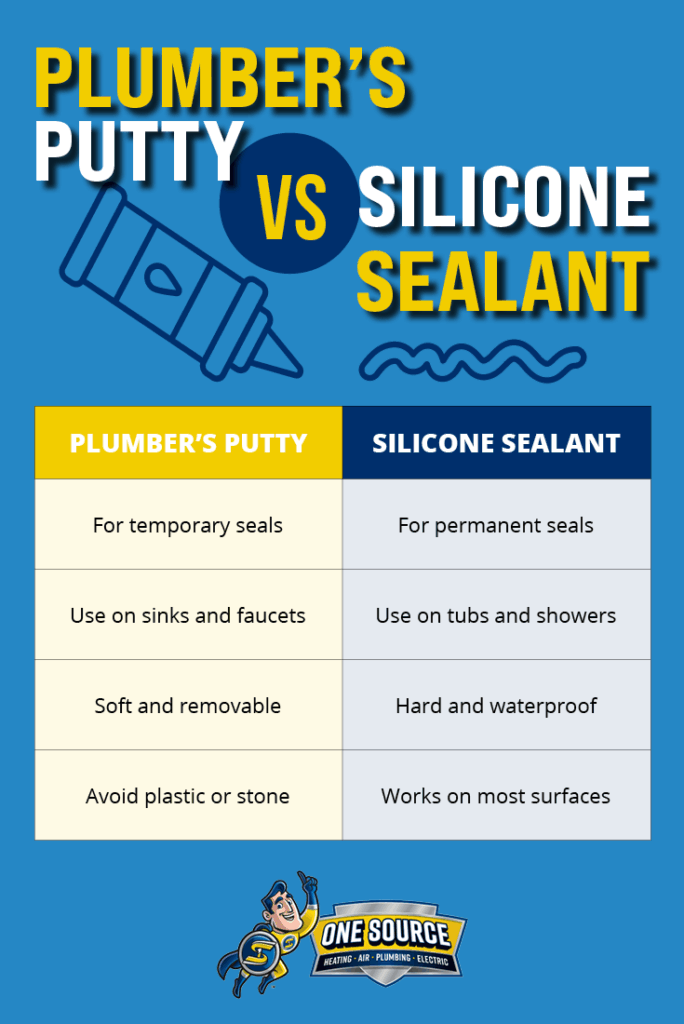

When To Use Plumber’s Putty vs. Silicone Sealant
It can be confusing to know which product to grab at the hardware store, and using the wrong one can lead to leaks, damaged fixtures, and costly plumbing repairs. Plumber’s putty is used to create a seal around a fixture that may be removed one day. Use plumber’s putty for sink drains, faucet bases, or any pop-up accessory.
Silicone sealant is a better choice for a permanent seal. Use it for sealing around bathtubs, showers, and backsplashes. It cures hard and creates a strong adhesive bond.
Why Plumber’s Putty Doesn’t Harden Like Glue
Glues and epoxies contain chemicals that create a rigid bonded structure when exposed to air. Plumber’s putty doesn’t contain any of these chemicals. It’s basically clay with a few oils to keep it pliable when you want a seal to remain flexible and removable.
Common Mistakes When Using Plumber’s Putty
Plumber’s putty is easy to apply, but there are a few common mistakes you may encounter:
- Using too little putty: It doesn’t take much for water to cut through, so don’t be afraid to apply multiple layers of putty on the fixture.
- Wrong material: Don’t use plumber’s putty on plastic, marble, or granite because it can stain and degrade some materials. Modern fixtures often come with a plastic gasket unsuitable for plumber’s putty.
- Unclean or wet surfaces: Clean and dry the surface to guarantee the plumber’s putty works. Any dirt or even soap can prevent a good seal.
- Overtightening: Make sure only a bit of putty falls out of the fixture. Only tighten until you feel a bit of resistance, then do another quarter turn.
How To Properly Apply Plumber’s Putty for a Tight Seal
Here’s how to properly apply plumber’s putty:
- Form putty rope: Remove some putty from the container and roll it back and forth in the palms of your hands. The longer the gap to fill, the longer the rope should be.
- Place it around the part: Lay one end of the putty rope and work in a loop until both ends meet.
- Press it into place: Press gently and don’t deform the putty. Apply just enough pressure so the putty holds when you turn the part over.
- Install the part: If you’ve used enough putty, some will squeeze out from the edges of the part. Tighten it all the way and wipe away any excess putty that appears.
Does Plumber’s Putty Dry Out or Crack?
Plumber’s putty can dry or crack when exposed to air for a long time. However, using and storing it properly helps it stay soft. If you don’t seal the container tightly after each use, air gets in, and the oils evaporate. Even with a tight seal, putty can dry out after several years.
You can sometimes revive some old, dry plumber’s putty using these tips:
- Soak it in water
- Add water and hand lotion
- Cover it in linseed oil
- Microwave it
How To Remove and Replace Old Plumber’s Putty
How do you remove plumber’s putty? If the putty is still soft, wipe it away with a rag or paper towel. If it’s started to harden, use a putty knife, or in a pinch, an old credit card. Avoid a scraper that can damage your fixture.
Use rubbing alcohol to clean the area of old plumber’s putty and dirt. Make sure the area is dry, and then follow our walkthrough above to apply the new putty.
Best Uses for Plumber’s Putty Around the Home
Beyond normal plumbing applications, plumber’s putty can be useful around the home. Garbage disposals are good places for plumber’s putty, particularly around the mounting flange. Plumber’s putty creates a reliable seal that won’t leak even with the vibration from the disposal running.
If you’re filling a few small holes in your walls and aren’t sure whether you want a permanent seal, using plumber’s putty is a good option.
Plumber’s Tips for Long-Lasting Seals
The professional plumbers at One Source have learned a few tricks to keep your putty in good condition for long-lasting seals:
- Store the container upside down: This evenly distributes the oils in the putty and prevents the top layer from drying.
- Warm your hands: This makes it easier to work with, especially when using plumber’s putty in cold weather.
- Don’t mix putties: While it may seem beneficial to mix different kinds of plumber’s putty, some mixtures don’t seal well together.
When To Call One Source Home Service for Professional Plumbing Help
While some plumbers’ putty applications are easy to achieve with DIY, if you’re dealing with complex fixtures, aren’t sure which sealant to use, or have multiple or recurring leaks, it’s best to leave it up to the professionals.
One Source Home Service provides expert repairs and plumbing installation throughout Colorado Springs.
Need Plumbing Repairs or a Consultation? Call One Source Home Services
Contact One Source Home Service today to schedule an inspection, repair, or replacement of your home’s equipment by certified local Colorado Springs experts.. One Source will deliver 5-Star-rated solutions for your home’s heater, air conditioner, plumbing, and electrical systems.